

Silicon dioxide, a chemical substance, plays a crucial role in numerous fields. It is an essential raw material for the production of glass, water glass, and quartz glass, and also holds a significant position in the electronics industry and the manufacturing of optical fibers. Moreover, silicon dioxide is a vital ingredient in the production of optical instruments, handicrafts, and refractory materials. Now, let’s explore these extensive applications of silicon dioxide together.

1.The application of fumed silica in plastics
Its excellent light transmittance and small particle size make plastics more compact. After adding silica to polystyrene plastic films, not only does it significantly improve their transparency, strength and toughness, but also enhances their water resistance and anti-aging performance. In addition, only a small amount of fumed silica needs to be added to ordinary plastic polyvinyl chloride to greatly increase the hardness, smoothness and anti-aging performance of the produced plastic steel doors and windows.
2.Coatings
The application of fumed silica powder in coatings has led to significant improvements in the performance of these nano-modified coatings. After testing, it was found that, except for the contrast ratio remaining unchanged, other properties such as washability, weather resistance, adhesion strength between the coating film and the wall, and coating film hardness have all been greatly enhanced. For instance, the washability of exterior wall coatings has increased from over a thousand times to over ten thousand times. The time for artificial accelerated climate aging and artificial radiation exposure aging has also been extended from 250 hours (with 1st-level powdering and 2nd-level color change) to 600 hours (no powdering, no color change in the coating film, and a color difference value of 4.8). At the same time, the self-cleaning ability of the coating film’s surface has been effectively improved.

3.Rubber
Adding a trace amount of fumed silica to ordinary rubber can significantly enhance its strength, wear resistance and anti-aging properties, making its performance comparable to or even surpassing that of high-grade rubber products, while ensuring long-term color stability. In addition, the nano-technology modified colored EPDM waterproof membrane exhibits remarkable improvements in wear resistance, tensile strength, flexural resistance and anti-aging properties, with vivid and eye-catching colors and excellent color retention.
4.Ceramics
By introducing silicon dioxide into ceramics to replace the original gaseous aluminum oxide, the advantages of nanoparticles can be exploited. This substitution not only enhances the strength and toughness of the ceramics but also significantly improves their hardness and elastic modulus, with the optimization effect even surpassing that of a single addition of aluminum oxide.

5.Dyes
The surface modification of dyes with silica significantly enhances their anti-aging performance. Meanwhile, this treatment also improves the brightness, hue and saturation of the dyes to a certain extent. Their performance is comparable to that of imported high-end products, thus greatly expanding the application fields and grades of the dyes.
6.Resin Composite Materials
By finely and evenly incorporating silica aerogel particles into resin materials, the overall performance of resin-based materials can be significantly enhanced. This includes increasing the strength and elongation of the material, improving wear resistance, and enhancing the smoothness of the material’s surface. Additionally, this method can effectively improve the anti-aging performance of resin composite materials, further expanding their application range.
7. Reinforcement of Glass Products
FRP products are renowned for their light weight, high strength and corrosion resistance. However, their hardness is relatively low and their wear resistance needs to be improved. By adding silica to the gel coat resin, the wear resistance can be significantly enhanced by 1 to 2 times. This is attributed to the grafting and bonding between the nanoparticles and the organic polymer, which not only increases the material’s toughness but also doubles the tensile strength and impact strength. At the same time, the heat resistance has also been greatly improved.

8.Application of Electronic Materials
By fully dispersing surface-activated silica in the matrix of silicone-modified epoxy resin encapsulation adhesive, the curing time of the encapsulation material can be significantly shortened to only 2.0 to 2.5 hours, while reducing the curing temperature to room temperature. This improvement significantly enhances the sealing performance of OLED devices, thereby extending their service life.
9.Application in the Cosmetics Field
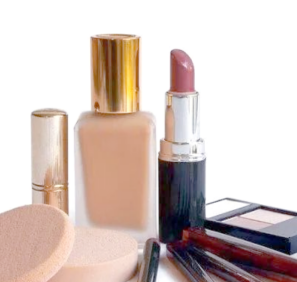
Silicon dioxide, as an inorganic component, is well compatible with other ingredients in cosmetics and is non-toxic and odorless. Its white color makes coloring simple and easy. More importantly, fumed silica has strong ultraviolet reflection ability and excellent stability. Even when exposed to ultraviolet rays, it will not decompose, discolor, or undergo chemical reactions with other components in the formula. These outstanding properties provide strong support for the improvement and upgrading of sunscreen cosmetics.
10.Antibacterial Materials
By taking advantage of the large specific surface area, abundant mesoporous structure, excellent adsorption capacity and unique physicochemical properties of fumed silica, we can uniformly embed functional ions such as silver ions into the mesopores of fumed silica and maintain their stability. Thus, we have successfully developed a highly efficient, long-lasting, high-temperature resistant and broad-spectrum antibacterial nano-antibacterial powder.